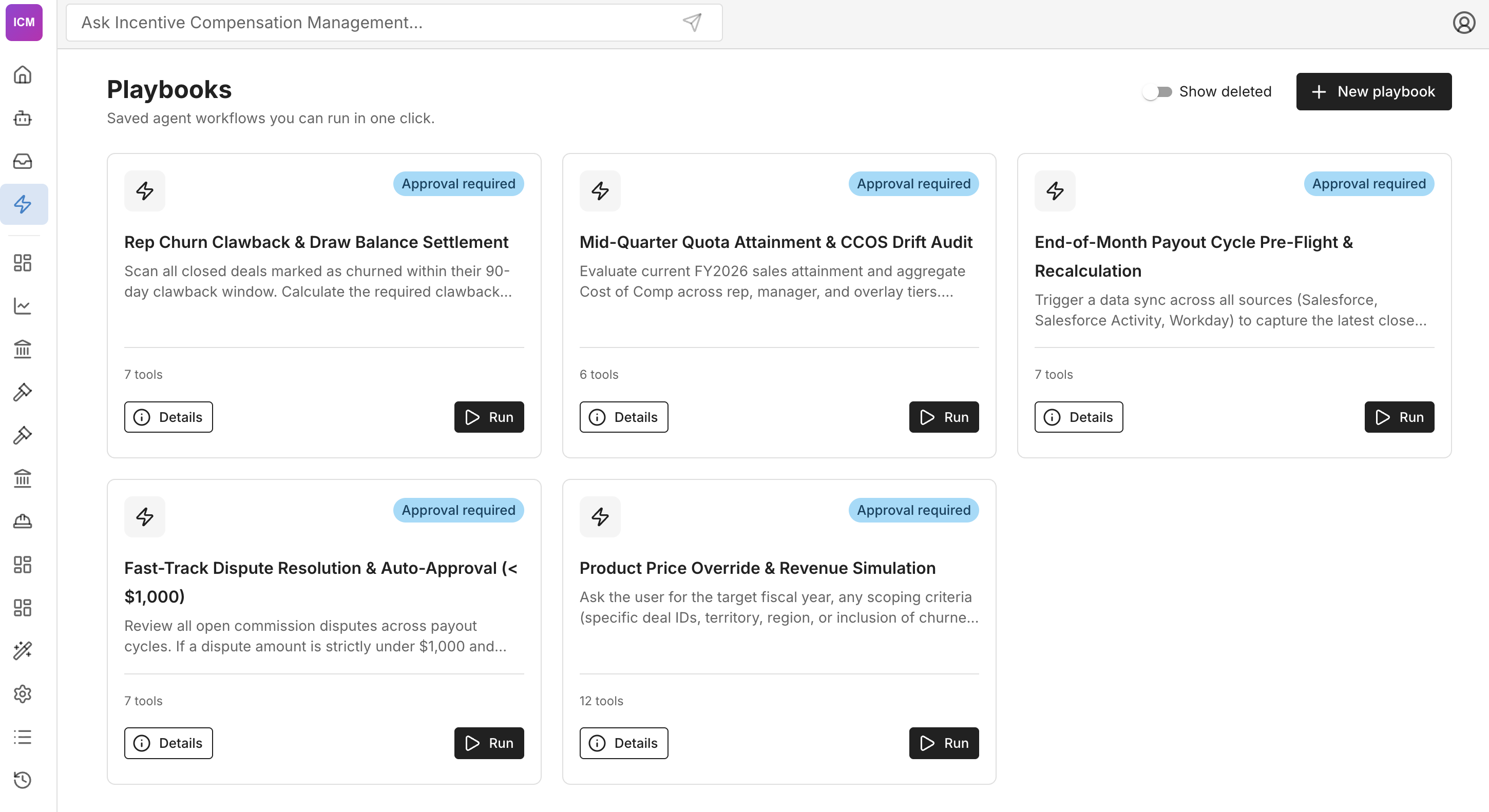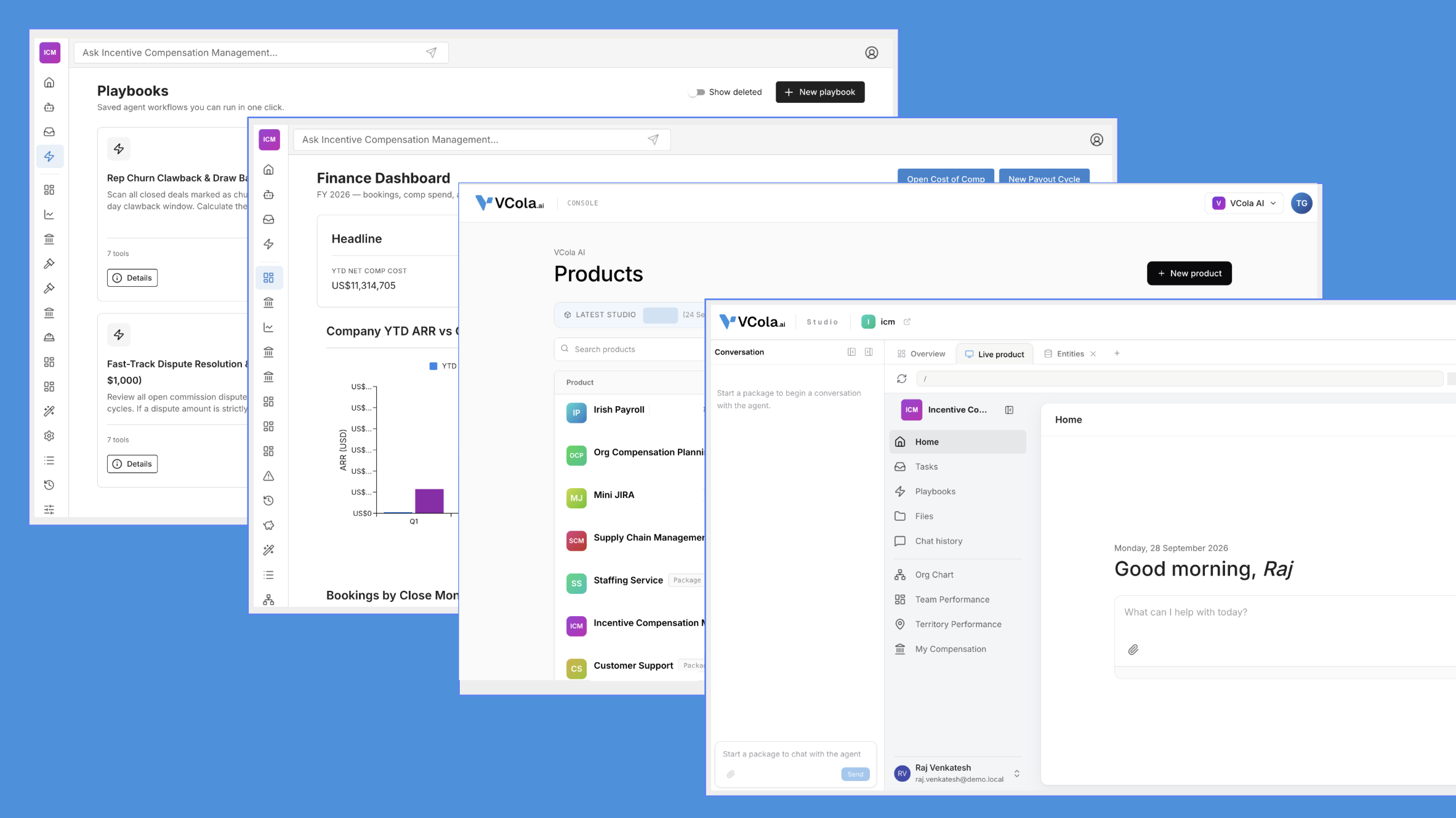
Last month we introduced Playbooks: saved, reusable prompts that let you describe what you want done and have your Agentic Enterprise Application carry it out, with human-in-the-loop approvals at the steps that need them.
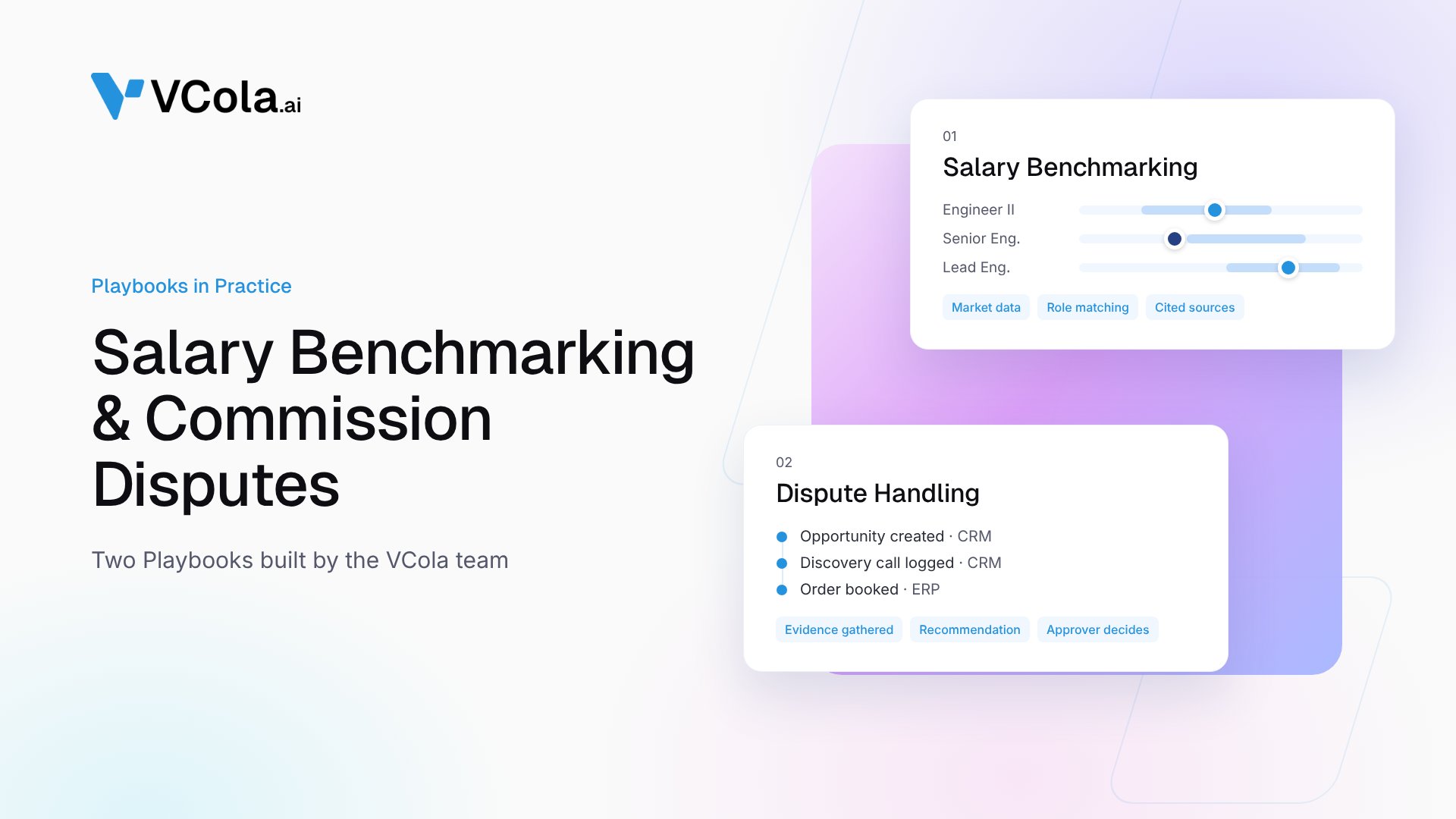
Since then, a few of us have been building Playbooks for problems we've run into ourselves. These are two of our favorites. The first pulls trusted market data from the web to benchmark salaries. The second gathers evidence from across the business to settle commission disputes. Both take work that someone used to do by hand and start it from a single request.
Playbook #1: Salary Benchmarking
One of our colleagues built this Playbook to help solve a problem most of us know well. Everyone argues about what the market rate is, and job titles mean different things at different companies. That matters, because pay is one of the main reasons people accept or turn down an offer, feel valued at their job, or move on.
With our Salary Benchmarking Playbook, we ask a question like "How do our software engineering salaries in Dublin compare to the market?" The Playbook then:
- Pulls current salaries, roles, levels and locations from our HR application, within the role-based permissions of whoever runs it.
- Searches the web for the salary sources we trust, including recruiter salary guides and official earnings statistics.
- Maps our internal roles and levels to the categories each report uses.
- Shows where each role sits against the market range, flags outliers above and below, and cites the source for every figure.
Step 3 is the reason this Playbook exists. One report's "Senior" can be another's "Lead", and a comparison is only as good as that mapping. So the Playbook matches roles on level, scope and responsibilities, not on titles alone. It shows every match it makes and flags the uncertain ones for a person to confirm before the comparison runs.
Because the sources are written into the Playbook, everyone who runs it uses the same method, and we can rerun it whenever new reports come out. If the analysis leads to a suggested change, such as a salary adjustment, that change still goes through our normal approval process.
HR and managers can run it across teams, and share what they find in pay reviews. Employees can run it on their own role, within what they're allowed to see. Either way, people get a clear, sourced answer on whether pay is fair, and the company can spot and fix gaps before they cost it good people.
What's Next
We've been discussing another Playbook that builds on this one.
A pay equity review for our HR team would turn the same analysis inward, comparing pay across gender, role and level within the business. With pay-transparency rules arriving across the EU, more companies will need to answer this question, and show how they reached the answer.
Playbook #2: Commission Dispute Handling
This one was built by our sales team, drawing on their own experience and on conversations with friends and former colleagues in sales. The problem kept coming up, and it's one we've written about before: comp disputes that swallow a quarter. A rep says they're owed credit on a deal, and someone in sales ops spends hours going through CRM records, email threads and order systems to find out whether they're right.
Our Dispute Handling Playbook, built into our Incentive Compensation Management application, does that investigation. When a dispute is raised, it pulls the activity logged against the deal in the CRM (meetings, calls, opportunity ownership, stage changes) along with relevant records from other connected systems. It compares what happened with the crediting rules in the comp plan, lays out a timeline of who did what and when, and links every point to its source record. Then it tells the approver whether the evidence supports the claim, and why.
We kept the final decision with the approver on purpose. A commission dispute is about someone's pay, and often about whether they feel the comp plan treats them fairly. Reps will accept a ruling they disagree with if a person they trust has looked at the evidence. They won't accept "the AI said no."
So the Playbook investigates and recommends, and the approver reviews the evidence, accepts or overrides the recommendation, and owns the outcome. Every decision is recorded, which leaves an audit trail if the question comes up again.
What's Next
We also want to reduce the number of disputes raised in the first place. Many start with a simple question from a rep: why is my payout this number?
An AE can already ask that question in chat today. A dedicated Dispute Playbook for AEs would go further. It would trace the payout back to the deals, plan rules and attainment behind it and explain the result in plain language. It would also show the rep the same evidence the approver's Playbook gathers, along with an estimate of how likely a dispute is to succeed. Reps who can see that evidence for themselves can decide whether a dispute is worth raising before they raise it.
Why Not Just Ask a Chatbot?
You could paste a salary report into a general-purpose AI assistant, ask it to compare, and get an answer. You wouldn't know which data it used, whether it followed the same method as last quarter, or whether the person asking was allowed to see those salaries in the first place.
A Playbook runs inside the application that holds the data, so it works from your live records and within each user's role-based permissions. Its method and sources are written down, so every run follows the same steps and anyone can see how a result was reached. Its findings link back to source records, and any action it recommends goes through the same approvals as everything else in the system.
Your Next Playbook
Every Playbook here started with someone on our team deciding they'd had enough of doing something by hand. What's yours?
Want to see what Playbooks could do for your team?